Coffee News
My Journey to explore coffee
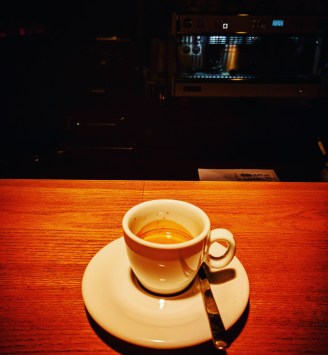
As a regular coffee drinker, I have always been thinking to addend a coffee course, to increase my awareness on the drink that i love. At last I had time and opportunity to do that! I can say that it was a wonderful opportunity and it turned out to be the best way to begin gathering info and experience!
It started with cupping, sensory training and the transformative journey of the coffee beans, from the plant to our cups.
During the training, I realized again that even though coffee looks quite a regular and simple drink, a lot of complicated factors intervene to change its quality and taste, since the blossoming of a plant in the plateaus of tropical countries till the final serving in some coffee house .
I also learnt that a lot of the coffee that we drink is actually low quality and poor taste compared to the potential of the drink itself.
- The source of the beans, the degree of the roasting, the fresh grinding just before you drink and how you brew is very important and it can completely alter the taste of the coffee that we are drinking.
When we were going back home after the coffee course, we had quite different emotions about the fresh information that we received. From one side it provided us with more awareness and indications to explore more about the drink but from time to time I think that ‘ignorance is bliss’. Because the more you think about the taste of a good coffee, the less you enjoy your daily coffee. That is why we decided to seek for alternative solutions to improve our daily coffee drinking. I am dedicated to seek enjoyable coffee shops with good coffee and ambiance.
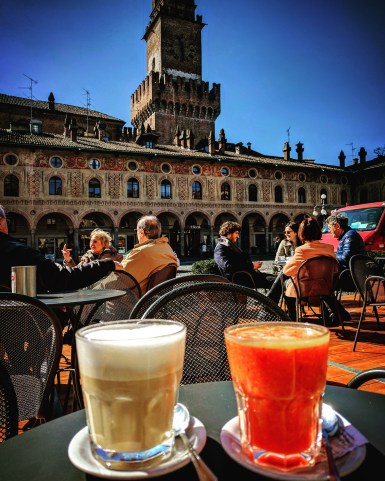
I am sure it will be a long and enjoyable journey for me, but I am happy to start my discoveries, with coffee as a companion 😊
Is it worth it?
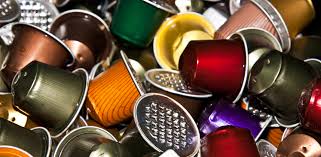
Is it worth it to produce 3 g of waste for each 6 g of coffee?
Enjoying coffee does not mean to forget all the rest, including our responsibilities for health and environment. Personally, I am in favor of supporting all the actions to protect them and am happy to contribute, even if just by writing an article J
During the last month, one important problem has re-emerged in mass media. Both BBC and Handelsblatt wrote that in Hamburg, the city council is no longer reimbursing expenses fkr coffee capsules/pods (like the ones commonly used in Nespresso-style breeding). So, what does it mean? It means that the council will not spend any other cent to buy any pods of coffee. This new regulation comes into effect, after the members of the council became aware of the difficulties in recycling the capsules, due to their composition.
Why are these coffee capsules harmful for the environment?
According to the statement of Jan Dube, spokesman of the Hamburg Department of the Environment and Energy, the capsules are composed of plastics and aluminum..
Moreover when the machine finishes the coffee, some part of the coffee sticks inside the capsules while you are trashing it. There is no elementary way to separate the three components (plastic, aluminium and coffee).
As a result, we drink 6g of coffee and product 3g of packaging waste. Is it really worth it to produce this amount of waste? I do not think so, neither does the administration of Hamburg.
“We’re doing our best in society to reduce greenhouse emissions, and in many ways we’re making progress, but in certain ways we’re going back 20 or 30 years,” says Doug Leblanc, a coffee shop owner from Nova Scotia, Canada interviewed by BBC.
There are analysis and reports how to recycle or reduce the wastes coming from the coffee capsules. Apparently these are not convincing for Piotr Barczak, waste policy officer at the European Environmental Bureau, also interviewed by BBC.
“The point with coffee pods isn’t about recycling – it’s about cutting down on the amount of stuff that we need to throw away or recycle,” he says.
Independently from the composition and recycling programs, Piotr Barczak’s opinion is very brave and Hamburg looks one step closer to eliminate the waste coming from the capsules. Given the fact that Germany is the third biggest consumer of coffee (Handelsblatt) with 526.860 tonnes/year after USA and Brazil (2010). It makes sense that they have serious responsibility and someone should give a start to an action for the environment.
While Nespresso is now focusing its recycle program, Caffe Vergnano (Italian) and Honest Coffee Company (New Zealand) have already found some new solutions. Caffe Vergnano is capable of producing biopolymer capsules, which can compost down naturally. On the other hand, Honest Coffee Company has its own 100% biodegradable capsules. Even though they can be used in Nespresso machines, these companies have not enough sales volume in the coffee market to create a change for these capsules.
 COFFEE MAPPING